
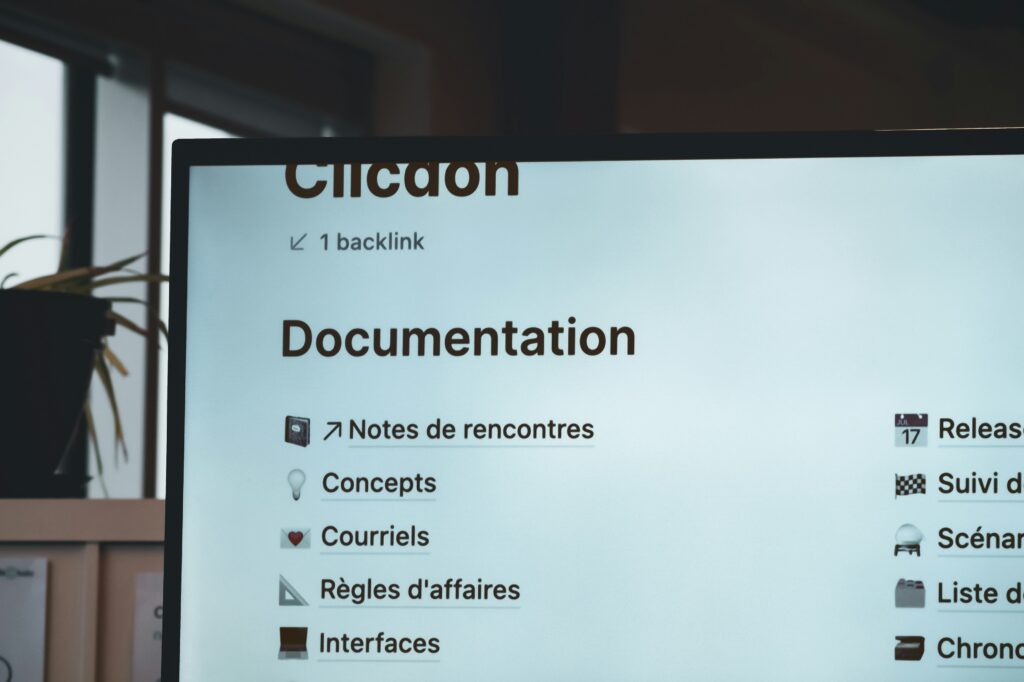
In many software projects, documentation is often treated as a “nice to have.” When deadlines are tight and budgets are under pressure, it is usually the first thing to be shortened, postponed, or skipped entirely. The focus goes to writing code, delivering features, and getting the system live as fast as possible. Documentation, on the other hand, is seen as extra work that does not directly create visible value.
Ironically, this mindset often leads to higher costs in the long run. Documentation is not just about writing things down for formality. When done properly, it quietly saves time, reduces misunderstandings, and prevents expensive mistakes. In reality, documentation is one of the most underestimated cost-saving tools in software projects.
Documentation reduces dependency on individuals
One of the biggest hidden costs in software projects is over-reliance on specific people. When system knowledge lives only in developers’ heads, the project becomes fragile. If a key developer is sick, resigns, or moves to another project, progress slows down immediately. New team members need weeks or even months to understand how things work.
Good documentation turns personal knowledge into shared knowledge. System architecture documents, flow descriptions, and technical decisions allow anyone joining the project to understand the logic behind the system more quickly. This reduces onboarding time and prevents the project from being blocked by a single person. Over time, this alone can save a company a significant amount of money and risk.
Documentation prevents repeated mistakes
Without documentation, teams tend to solve the same problems again and again. A bug is fixed, but no one writes down why it happened or how it was resolved. Months later, the same issue appears, and the team spends time debugging it all over again.
Clear documentation of known issues, limitations, and design decisions acts as a memory for the project. It helps teams avoid repeating past mistakes and making decisions that were already evaluated and rejected. This reduces wasted effort and shortens problem-solving time, especially in long-term projects.
Documentation makes communication cheaper and clearer
Many hidden costs in software projects come from miscommunication. Business teams, developers, testers, and external partners often have different assumptions about how the system should work. When requirements are not clearly documented, misunderstandings appear late in the project, when fixing them is the most expensive.
Well-written requirement documents, user flows, and functional descriptions create a shared understanding from the beginning. They act as a single source of truth that everyone can refer to. Instead of long meetings to clarify the same topics repeatedly, teams can rely on documented agreements. This saves time, reduces frustration, and lowers the cost of rework.
Documentation reduces maintenance and support costs
Software does not stop costing money after it goes live. Maintenance, bug fixes, upgrades, and support often cost more than the initial development itself. When documentation is missing, even small changes become risky and time-consuming because developers are afraid of breaking something they do not fully understand.
With proper documentation, teams can quickly see how different parts of the system are connected. They can identify where changes should be made and what impact those changes might have. This leads to faster fixes, fewer production issues, and lower long-term maintenance costs.
Documentation supports better decision-making
Every software project involves trade-offs. Choices are made about technology, architecture, performance, security, and scalability. When these decisions are not documented, future teams may question them or unknowingly reverse them, creating inconsistencies and technical debt.
Documenting the reasoning behind key decisions helps future stakeholders understand why things were built a certain way. This context allows teams to make better decisions when extending or modernizing the system, instead of blindly rewriting or overengineering parts that already work. Better decisions mean fewer unnecessary changes and lower costs over time.
Documentation improves quality without slowing development
A common fear is that documentation will slow down development. In practice, lightweight and well-structured documentation often speeds it up. When developers know exactly what needs to be built and how the system is supposed to behave, they spend less time guessing, rewriting, or fixing misunderstandings.
Documentation does not need to be long or complex to be effective. Clear explanations, simple diagrams, and concise descriptions are often enough. The goal is not to document everything, but to document the right things. When done with this mindset, documentation becomes a productivity booster rather than a burden.
Documentation is an investment, not an expense
From a short-term perspective, documentation looks like extra cost. From a long-term perspective, it is an investment that pays back quietly and continuously. It reduces risk, saves time, lowers maintenance effort, and makes teams more resilient to change.
Companies that view documentation as part of their core development process tend to scale more smoothly. Their systems are easier to maintain, their teams collaborate better, and their projects are less dependent on individual heroes. Over time, this translates into real financial savings, even if those savings are not immediately visible on a project invoice.
In software projects, the most expensive problems are often the ones that could have been avoided. Documentation is one of the simplest and most effective ways to avoid them. That is why, although it may be hidden, documentation remains one of the smartest cost savers a software project can have.